- Questions? (801) 930 5821

Covert Audio Recording
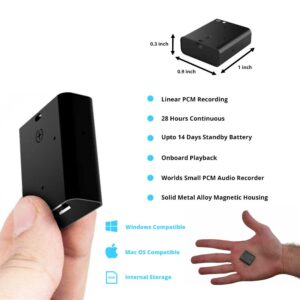
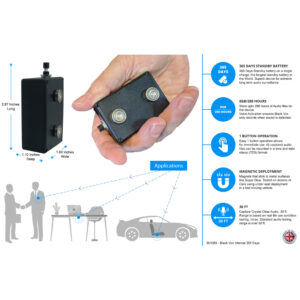
The Covert Audio Recording range from PBN-TEC is built on a long history of professional use by investigators, law enforcement, and private security teams worldwide. Each solution is designed for situations where reliability and discretion matter most.
When recording must be achieved without drawing attention and when evidence has to stand up in real-world conditions, these devices deliver.
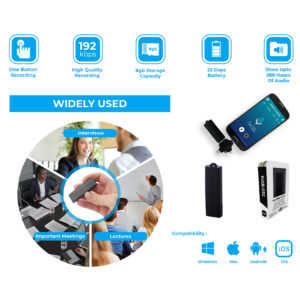
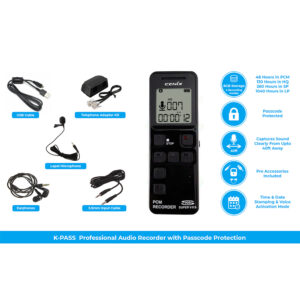
All PBN-TEC covert audio devices feature voice activation with time and date stamping, giving operators confidence that recordings are both authentic and efficiently captured.
Operational Needs Covered
- Long-term covert recording – extended surveillance operations requiring continuous, reliable capture.
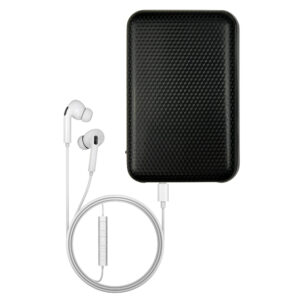
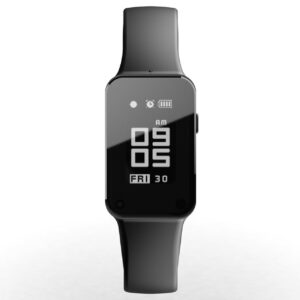
- Wearable recorders – discreet, on-body systems used during interviews, covert encounters, or fieldwork.
- Specialised recorders – optimised for use in difficult or noisy environments where standard devices fail.
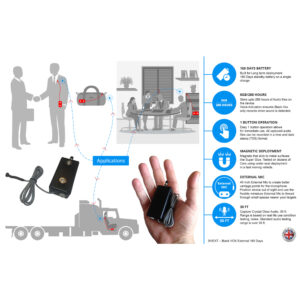
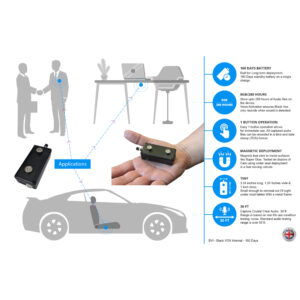
- Smart placement solutions – designed to capture clear audio even when microphones are fully concealed.
By combining ease of use with professional-grade recording quality, these systems give operators the right toolset for securing audio evidence where there is no room for error.
What is covert audio recording and how is it used in professional investigations?
Covert audio recording is the discreet capture of conversations without drawing attention. Professionals use it for surveillance, compliance checks, intelligence gathering, and private investigations. Modern systems are designed for long-term use, with voice activation and date/time stamps to provide reliable evidence in sensitive situations.What features make a covert recorder suitable for professional use?
Key features include voice activation, time/date stamping for chain-of-custody, extended battery life, high-quality microphones, and discreet form factors for concealment. Professionals also value devices that perform well in noisy environments and allow flexible placement to ensure clear capture.How do investigators choose the right device for different scenarios?
Choice depends on the operational context. Long-term stakeouts require recorders with extended runtime and storage, while wearable devices are ideal for discreet personal use during interviews. In difficult acoustic environments, models with specialised microphones or placement accessories are preferred.Why is time and date stamping important in covert recording?
Time and date stamps authenticate recordings and provide an auditable trail for investigators, compliance officers, or courts. This metadata strengthens credibility by showing when and how evidence was collected, helping ensure it stands up under scrutiny.What are the risks of using consumer-grade instead of professional covert recorders?
Consumer devices often lack reliability, secure time/date stamping, and long-term endurance. Audio quality may be poor, and devices may be easier to detect. For professionals, these weaknesses create operational risks and reduce the chance that recordings will hold evidentiary value.How discreet are modern covert audio recorders?
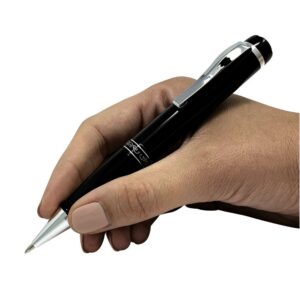
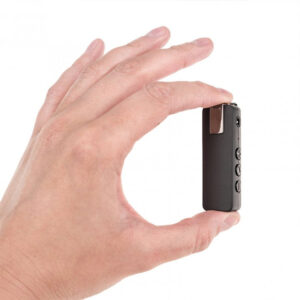
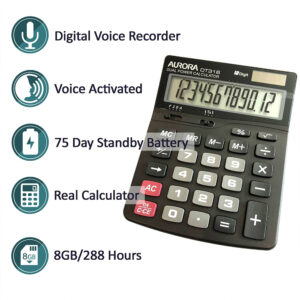
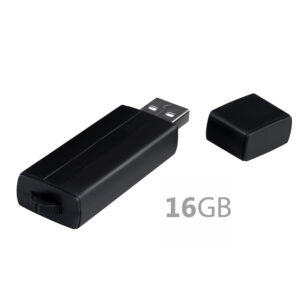
Professional covert recorders are designed to blend seamlessly into daily environments. Some are wearable, others disguised within everyday objects, and many are small enough to conceal in furniture or vehicles. The aim is always the same: to remain unnoticed while capturing clear, usable audio.Guide: A Practical Guide to Professional Audio Recorders and Real-World Use
Read More
This guide explains the baseline requirements of professional audio recorders and how different user scenarios — from long-term monitoring to covert wearable recording — determine what type of recorder is appropriate.
Establishing a credible baseline for professional audio recording
Before considering form factor or concealment, there is an acceptable baseline that all professional audio recorders must meet.
At a minimum, a professional or covert audio recorder must:
- capture clear, intelligible audio at realistic distances
- include accurate time and date stamping for evidential timelines
- support voice-activated recording for unattended use
- operate reliably over extended periods
Without these fundamentals, recordings quickly lose value — particularly in investigations, workplace incidents, legal review, or evidence capture.
These features are not optional. They define whether an audio recorder is fit for professional use.
Why voice activation and time stamping matter in practice
In real deployments, users are not always present when events occur. Conversations move, environments change, and critical moments are often unpredictable.
Voice-activated audio recorders ensure relevant audio is captured without producing hours of unusable data, making them essential for long-term audio recording and unattended scenarios. Time and date stamped recordings are critical for reconstructing events, validating sequences, and maintaining evidential integrity.
For anyone using an audio recorder for investigations or evidence, these features are foundational.
Scenario-driven selection of audio recorders
Once the baseline is established, choosing the right device becomes a matter of use case, not feature count.
Common professional scenarios include:
- long-term audio recording for investigations or monitoring
- tactical audio recording where portability and speed matter
- covert or wearable audio recording devices where discretion is essential
- unattended recording where the device must operate independently
Each scenario places different demands on battery life, storage, concealment, and user interaction. A professional audio recorder range exists to support these different requirements clearly and consistently.
A consistent ecosystem across the audio recorder range
A common problem buyers face is uncertainty around core functionality.
Within this range, essential features such as voice activation and time/date stamping are standard across all audio recording devices. This removes guesswork at the point of selection and ensures consistency across deployments.
Users can then focus on what actually differentiates devices:
- recording duration
- concealment and form factor
- onboard playback requirements
- suitability for covert or overt use
This ecosystem approach allows users to move between devices without compromising on professional fundamentals.
From investigations to covert and wearable recording
The audio recorder range supports a wide spectrum of professional applications, including:
- audio recorders for investigations and evidence collection
- incident documentation and compliance review
- covert audio recording devices and wearable recorders
- tactical and operational audio capture
Each device is aligned to defined real-world scenarios, not theoretical use cases. The goal is to help users select an audio recorder that matches their environment and responsibility without overspecifying or under-equipping.
Choosing what is appropriate, not excessive
Professional audio recording is about appropriateness, not excess.
The right professional audio recorder is one that:
- captures usable audio when it matters
- preserves timing and context
- operates reliably in its intended environment
- stands up to scrutiny if recordings are reviewed later
This range exists to make that decision clearer — by ensuring the baseline requirements of professional audio recording are always present, and allowing users to select deeper capability only where it is genuinely required.